
by Justin Query
***
The spooky season prepares to take its final breath, and there are so many ways in which film fans can enjoy cinematic scares before the sun rises on November 1st. So — for some — that final scary movie in October should represent something special, whether a classic slasher like Halloween (1978) or an anthology of terror like Trick ‘R Treat (2007).
And — for others — the film should check more than a single box, demonstrating both a unique creativity for genre storytelling and a reverence for all horror filmmaking that’s come before it. In response, one’s attendance is ultimately requested at a particular cabin in the woods, populated with all of the terrors of the Halloween holiday.
Welcome, then, to the cabin in the woods.
***
There’s a moment in Drew Goddard’s subversive 2011 film The Cabin in the Woods when all of the recognizable horror tropes that have been laid out like playing cards are beginning to come together like a stacked deck in a crucial game of poker. When even stoner Marty Mikalski (played by Fran Kanz) is beginning to see how it all fits together and prophetically asks, “Do you seriously believe nothing weird is going on?”
It was a loaded question then, and it remains loaded today. It didn’t take long after that for the audience to realize that they weren’t so much watching a horror movie as they were watching a horror movie about horror movies, watching a story about storytelling.
Indeed, something weird happened when fans back then — or audiences for the first time today — saw The Cabin in the Woods, one of the most ambitious and innovative horror films of the past decade, if not the century, saying as much as it does about the genre itself as it does about the audiences that enjoy it.
The Cabin in the Woods tells the story of five friends who venture into the wild to stay at a creepy cabin for the weekend. Sounds familiar enough, perhaps even laughably so. Throughout their stay there, the group is introduced to more familiar ingredients of the horror genre. The diary that will release evil into the world if read aloud, the conch shell that will release evil into the world if blown into, the puzzle game that will release evil into the world if somehow solved, et cetera, et cetera, et cetera.

Little by little, the scene appears to look more and more like the kids are playing out the very scripted scenarios of a very traditional horror film. But there’s something even weirder going on here that the audience doesn’t see coming until it’s too late.
Soon, the proverbial man behind the curtain is revealed, and it’s remarkably clear that the kids — now transformed, in personality, in motivation, in behavior, into archetypal versions of themselves — are the subjects of a grand underground project that intends to sacrifice them through a horrific horror movie-like fate. These once realistic young people are now cinematic caricatures of the horror genre (the athlete, the scholar, the whore, the virgin, and the fool) and they’re meant to be destroyed just as their silver screen counterparts have been destroyed in horror movie after horror movie after horror movie. The universe demands these particularly gruesome deaths to be orchestrated just so. If the Ancient Ones go unappeased, they’ll return from the depths of the world in order to bring about humanity’s ultimate destruction.
This is a story as old as time. It has always been this way. And it must always be this way.
Little by little, the scene appears to look more and more like the kids are playing out the very scripted scenarios of a very traditional horror film. But there’s something even weirder going on here that the audience doesn’t see coming until it’s too late.
In interviews during the film’s initial release, director Goddard did his best to leave some questions unanswered, preferring instead to allow the audience to reach its own conclusions about what the film meant on a surface level versus what it meant in a more meta context. The film’s success, by and large, depended upon a spoiler-free experience for the audience, and filmgoers soon discovered that the true fans of the film were very protective of the movie’s secrets, hoping that moviegoers would experience the film in the unadulterated manner in which they themselves first experienced it. The less one knew about the film going into it, the better. And the film, then, is even more effective upon subsequent viewings, when the audience is more hyper-aware that they’re watching a magic trick develop in real-time, fully aware that a rabbit is about to be pulled from a top hat.
So Goddard allowed the audience to have the film their way, whatever way that may have been, at least for a moment. Whether subverting the expectations of the horror genre or entirely intending to reinvent the horror genre or deconstructing all of the tiny, moving parts in order to demonstrate how they’ve all fit together for so many decades, Goddard eventually couldn’t resist the opportunity to expose the proverbial secrets of the Land of Oz that he’d constructed.
In an interview with Jane Schoenbrun for Filmmaker, Goddard explained that the film is a critique of society more than it is an attempt on his part to manipulate the intricacies of the horror genre. Why is the genre, after all, so predisposed to deprecating young people, so satisfied with its ability to lionize them only in order to then destroy them? It’s a trope of a genre that is then meant to appeal to the very people that make up its core audience, and it’s a complex relationship, to be certain. Goddard went on to say that the phenomenon isn’t reserved for filmmaking by any stretch of the imagination. In the real world, adults tend to romanticize the experience of youth, encouraging young people to hold on to those years for as long as they can while simultaneously demanding that young people “grow up,” thereby destroying the precious thing that the world is meant to cherish.
“We talk about that in Cabin, that this is not new,” he said in the interview. “There’s a timeless quality to our destruction of youth that’s very interesting to me. I feel Cabin is much more a critique of that — of those things that the horror movie suggests are deep within us as a people. To me, that’s fascinating.”
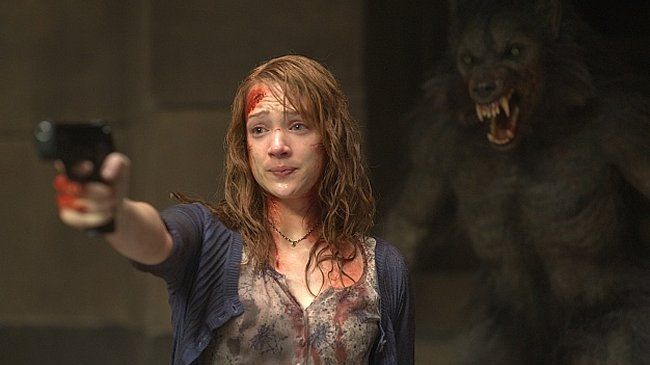
Yet what is equally fascinating about the film is how it diverges from the expectations of the genre in doing so. In the traditional slasher films of the 1980s, for example, there was something seemingly deserved in the deaths of the films’ teenagers. Their very behavior seemed to inspire a fate that audiences gleefully anticipated and then relished. Yet in Cabin, co-screenwriter Joss Whedon — true to creative form — developed characters so human in their mannerisms that the audience feels cheated in their dramatic deaths. He committed the same affronts as the writer of Marvel Comics’ Runaways. With his partner in crime Goddard, the two did the same when working together on fan favorites Buffy the Vampire Slayer and Angel. Under their care, the cabin’s heroes contradict the genre’s confidences so that the characters are remarkably more charming, likeable, even indispensable than a sympathetic audience could ever have imagined, making their gruesome fate all the more dramatically unsettling.
And herein lies the subtle truth of Cabin: the anticipation of the sacrifice that must take place over the course of the film’s 90-minute runtime precisely mirrors the anticipation of the sacrifice that the moviegoing audience itself looks forward to when they watch horror. It’s a strange, symbiotic exchange, and the filmmakers tap into it perfectly.
It’s perhaps part of the meta experience that the filmmakers entirely intend, that any horror film — not just Cabin or its teen-populated predecessors — is a sacrificial experience for the moviegoers themselves. In its way, when horror fans sit down for a horror film, they’re escaping the horrors of the real world that cannot be so easily escaped or avoided outside of a multiplex theater, outside of a home theater. And in so doing, filmgoers are exposing themselves to an imagined horror that is meant to expose them to a horror that is manageable, if only momentary. When a horror film ends, the catharsis is complete.
Moreover, just as Goddard insisted that horror films have traditionally — and with little rational explanation — idealized young people only in order to slaughter them, to snuff out youth, so too does the audience participate in the process. Attending horror films, perhaps the moviegoers recognize the fragile nature of youth — even their own — and unconsciously watch its destruction against the backdrop of the real destruction of youth in society today. “Nothing gold can stay,” they say, and this has never been more true than in the world as it is true in the plotlines of traditional horror films.

And herein lies the subtle truth of Cabin: the anticipation of the sacrifice that must take place over the course of the film’s 90-minute runtime precisely mirrors the anticipation of the sacrifice that the moviegoing audience itself looks forward to when they watch horror. It’s a strange, symbiotic exchange, and the filmmakers tap into it perfectly.
Haunted by the death of their youth and innocence, older audiences can vicariously experience that sense of loss again and again, without the ultimate pain that generally accompanies it in the process of growing up, in experiencing enduring tragedy in the real world.
And faced with the ever imminent death of their own youthfulness, then, younger audiences can watch the slaughter play out against these archetypal characters before the genuine experience of loss that will come for them all, perhaps clad in the symbolic mask of a slasher prepared to terrorize a summer camp.
Weird, indeed.
The Cabin in the Woods is currently streaming on Peacock.
***
This piece — written by Justin Howard Query and after some additional editing here — was originally published by another source.
 Front Center Seat [Is Where I Sit]
Leave a comment